It's 11 PM and you're on a call with a factory in Ningbo while your inbox fills up with a freight quote, a customs question, and a 3PL asking where your cartons are. You've decided it's time to hire someone, so you open a job board and paste in a template you found online. It asks for SAP experience, a CDL, and ten years of warehouse leadership, and none of that has anything to do with your business.
I built an Amazon FBA and Shopify brand to $3M ARR, and the first supply chain job post I wrote was mostly copied from a big company. It attracted the wrong people and missed the work I actually needed done. This guide gives you a job description written for a small brand that buys from overseas factories, with duties, skills, KPIs, and a template you can edit and post today.
TL;DR
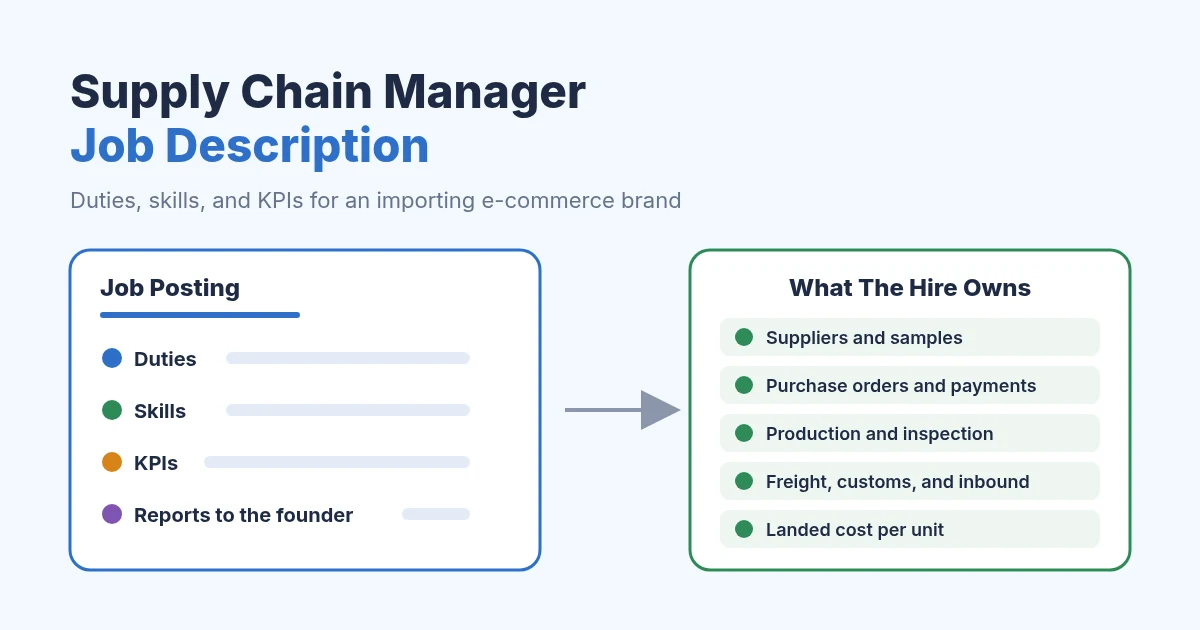
- At an e-commerce brand that imports, a supply chain manager owns suppliers, purchase orders, production follow up, inspection, freight, customs, receiving, and landed cost per unit.
- Write duties around one import order from start to finish, and leave out enterprise items like plant equipment, fleets, and ERP modules you don't use.
- Ask for skills you can test, like spreadsheet fluency, clear written English, supplier negotiation, landed cost math, and basic Incoterms and customs knowledge.
- Put four or five KPIs in the posting, such as supplier on-time rate, inspection pass rate, landed cost against plan, stockout days, and invoices matched to POs.
- Use the template below, add a real pay range, and check our salary guide before you pick a number.
What A Supply Chain Manager Does At An E-Commerce Brand
A supply chain manager makes sure the right products get made, paid for, shipped, and received at the right cost and on time. At a big company that might mean running warehouses and fleets, but at a small importing brand the work is closer to the factory. They find and manage suppliers, place purchase orders, follow production, arrange freight and customs, and make sure stock arrives at your 3PL or at Amazon before you run out.
The U.S. Department of Labor's O*NET profile for supply chain managers lists the official tasks for the role. Several of them map straight onto an importing brand, like negotiating prices and terms with suppliers and freight forwarders, monitoring supplier quality and delivery, and defining performance metrics for things like product cost and quality. Others, like choosing equipment to load and unload materials, belong to a warehouse operation you probably don't run.
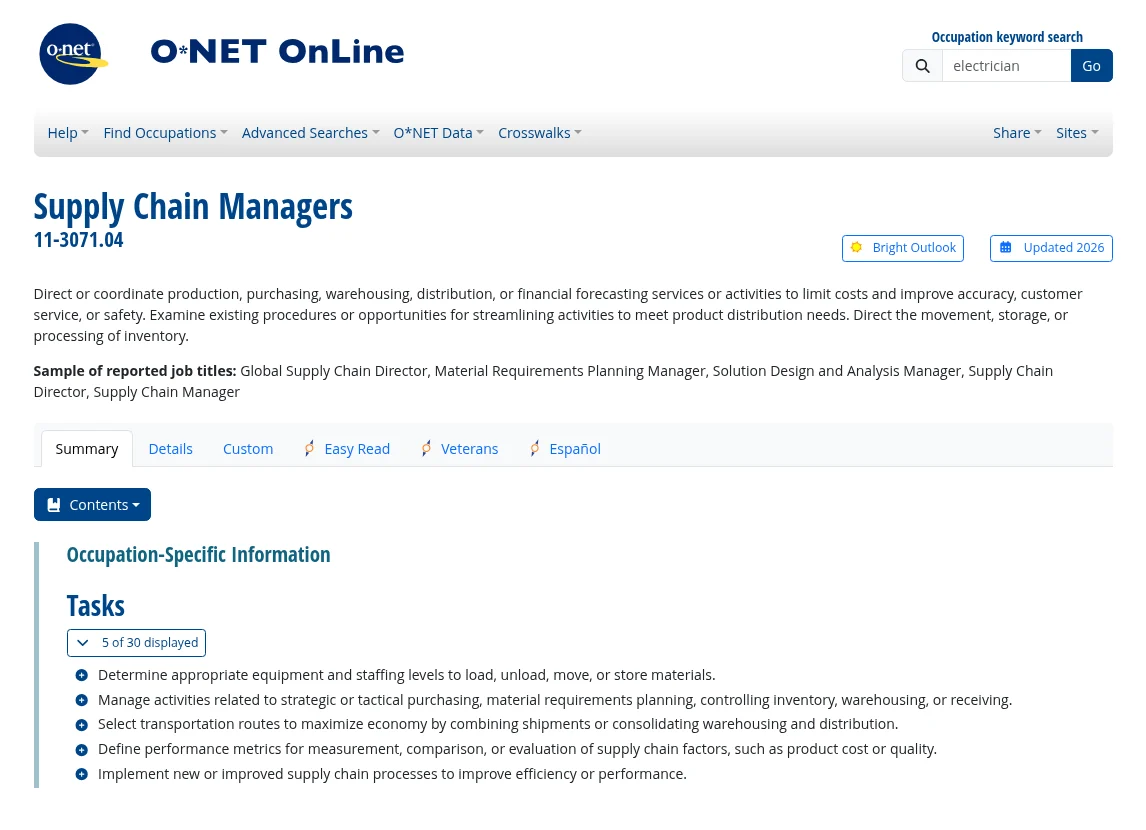
O*NET's official task list for supply chain managers
The useful part of that list is the language. When you borrow O*NET's wording for the tasks that fit and drop the rest, your posting sounds familiar to experienced candidates and still describes your real business. If you're still deciding whether you need a person at all, our guide on whether to hire a supply chain manager or use software compares the options side by side.
How The Role Changes As Your Brand Grows
Most brands don't jump straight to a full-time supply chain manager. In the beginning you do the work yourself, then you bring in part-time help for follow up and paperwork, and later you hand one person the whole job. Each stage needs a different job description, and posting the stage 3 version when you need stage 2 help is a common way to overpay.
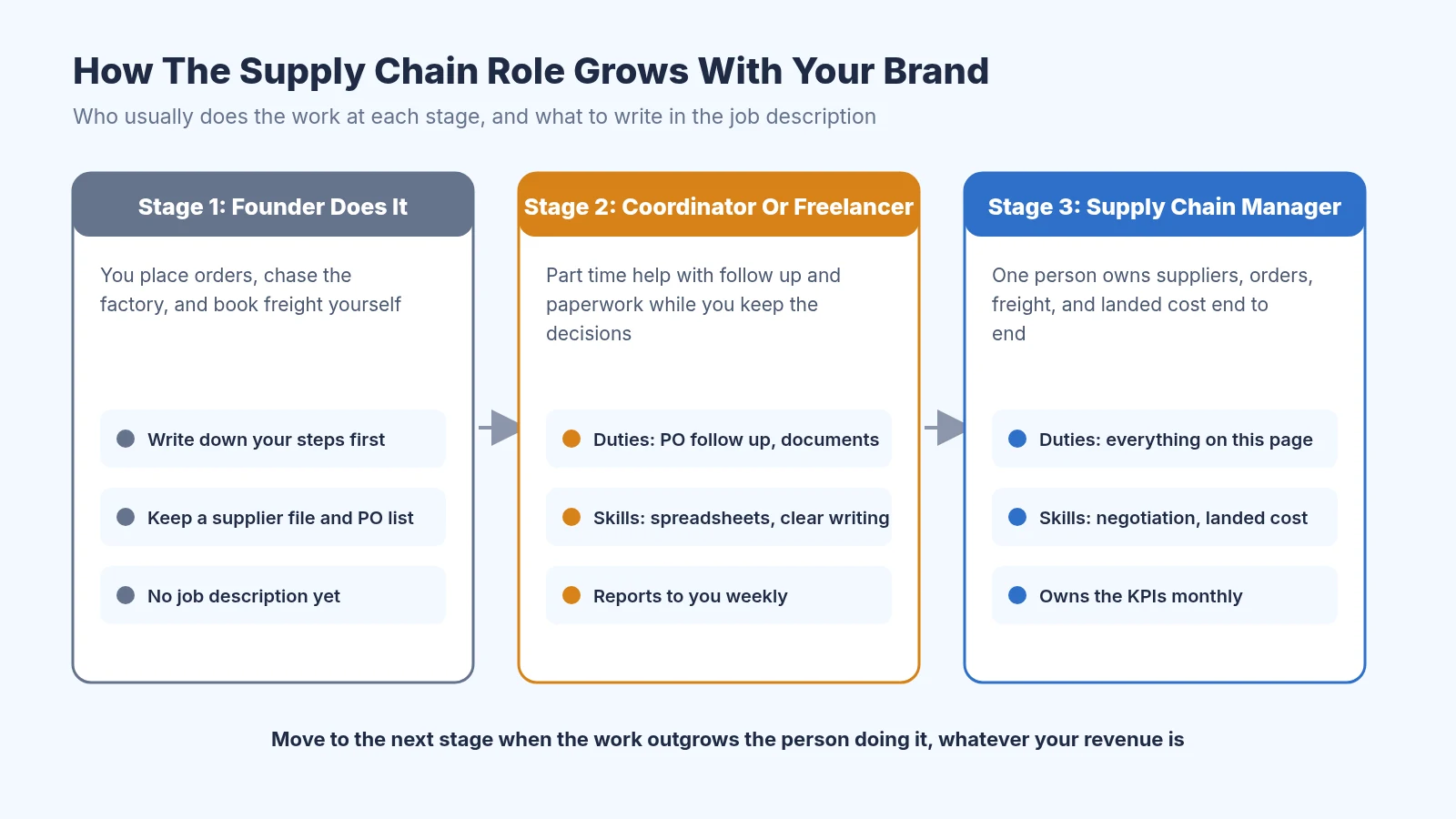
Who usually does the supply chain work at each stage
I'd move to the next stage when the work outgrows the person doing it, rather than at a revenue number. Good signs are restocks overlapping each other, invoices going unchecked for weeks, or you finding out about a late shipment from your 3PL instead of your own records. Before you hire, write down how you place and follow an order today, because that document becomes the training plan.
If you'd rather hand the whole job to an outside team for now, our guide to outsourced supply chain management for ecommerce explains how that works. We also run an outsourced supply chain service where a supply chain manager handles orders, suppliers, and freight for you.
Core Duties To Put In The Job Description
The easiest way to write duties is to follow one import order from the first quote to sellable stock. Every step leaves a record behind, like a purchase order, an inspection report, or a freight bill, and the person you hire should own each one. Here's the path I'd describe in the posting.
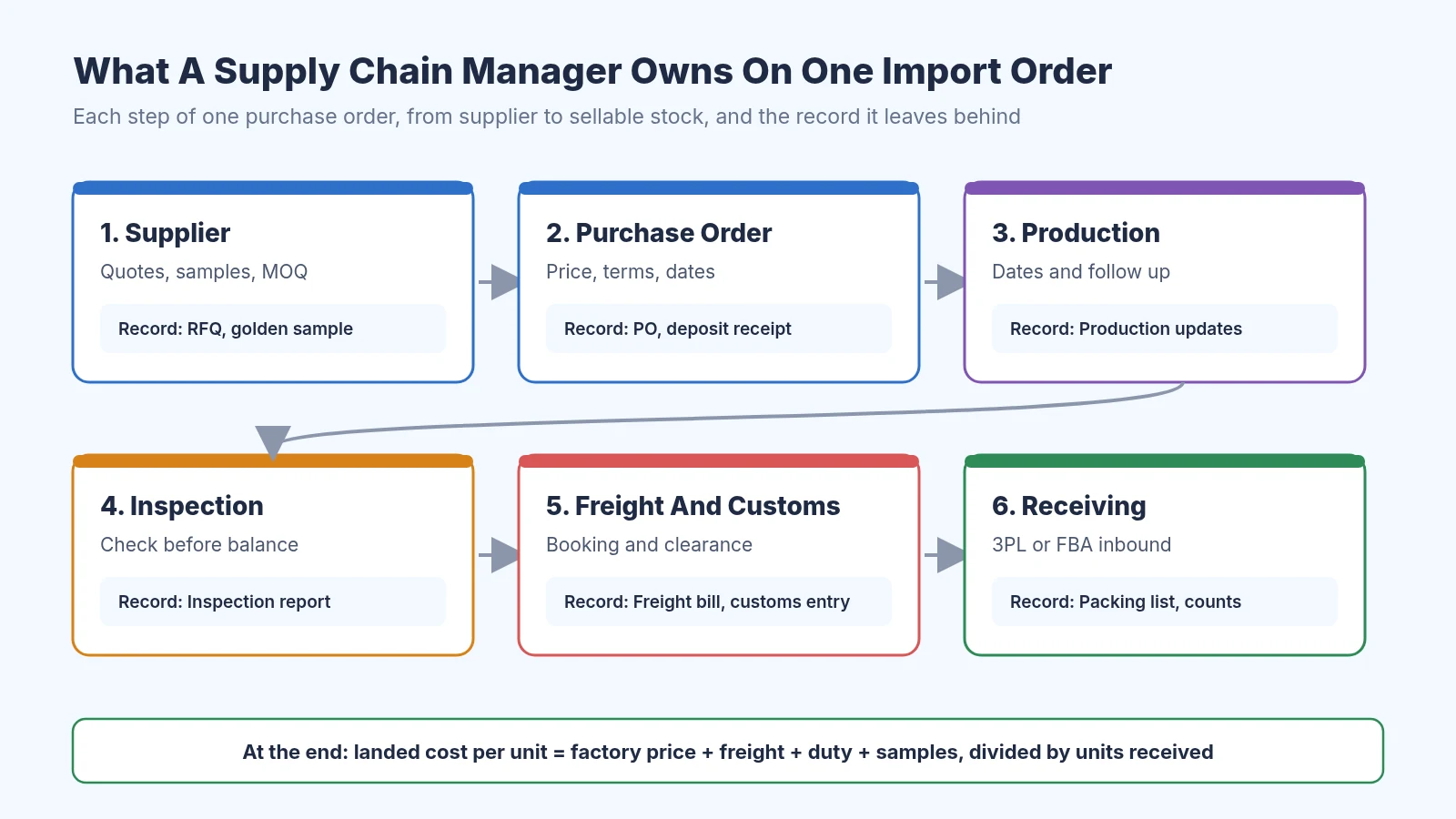
The duties on one import order and the record each step leaves
These are the duties I'd list for an importing Amazon or Shopify brand. Cut any that a partner, like your 3PL or forwarder, already handles for you.
- Supplier sourcing and onboarding. Request quotes, order and approve samples, check factory details, and keep a supplier file for every product. Our supplier onboarding process covers the steps.
- Purchase orders and payments. Issue POs with price, quantity, Incoterm, and dates, then pay deposits and balances by wire or bank transfer after confirming bank details. Our guide to 30/70 payment terms with Chinese suppliers explains the common deposit split.
- Production follow up. Confirm production start, chase updates, and flag delays early enough to change launch or restock plans.
- Quality and inspection. Book an inspection before the balance is paid and decide what happens when units fail.
- Freight and customs. Get freight quotes, book shipments, and work with the forwarder and customs broker so cargo clears without surprises. Our explainer on FOB vs EXW vs DDP shows who pays for what under each term.
- Receiving. Send inbound notices to your 3PL or create FBA shipments, then compare received counts against the packing list.
- Invoice checks and landed cost. Match each supplier invoice to its PO and work out landed cost per unit from factory price, freight, duty, and samples. Our guide on how to reconcile a supplier invoice to a purchase order walks through the check.
- Reorder planning. Use lead times and sales speed to decide when the next PO goes out, so top sellers don't run out.
That list is long, and a single person can handle it at a small brand when the records live in one place. If you sell only on Shopify or only on Amazon, trim the receiving line to the one you use. Our Shopify inventory management guide and Amazon FBA inventory management guide show what the receiving side looks like for each.
Skills And Experience To Ask For
Ask for skills you can check in an interview or a short paid test. O*NET lists skills like negotiation, judgment and decision making, time management, monitoring, and mathematics for this role, and the BLS Occupational Outlook Handbook adds communication, organizational, and problem-solving skills. For an importing brand, I'd turn those into concrete requirements like the ones below.
- Spreadsheet fluency. They should be comfortable building a PO tracker and a landed cost sheet in Google Sheets or Microsoft Excel without help.
- Clear written English. Most supplier work happens over email and chat apps, so short, unambiguous messages matter more than meetings.
- Supplier negotiation. They should be able to push back on price, MOQ, and dates while keeping a good relationship with the factory.
- Landed cost math. They should know how factory price, freight, duty, and samples add up to a per unit cost, and how that differs from COGS. Our explainer on landed cost vs COGS covers the difference.
- Incoterms and customs basics. They should understand FOB, EXW, and DDP, HS codes, and what a customs broker does.
- Marketplace inbound experience. For FBA sellers, ask for experience creating shipments and labeling cartons for Amazon, and for Shopify brands, experience working with a 3PL.
On experience, the BLS says these managers typically need five or more years of work in a related job, and that some employers prefer a bachelor's degree. For a small brand, I'd care more about whether they've personally managed overseas suppliers for physical products than about the degree. Someone who has worked at a sourcing agent, a freight forwarder, or another importing brand often ramps up fastest.
KPIs The Supply Chain Manager Should Own
Putting KPIs in the posting tells candidates how they'll be judged, and it keeps the first review from being a matter of opinion. I'd pick four or five and review them once a month with your new hire. You set the targets together after the first few months of real data, rather than guessing at them before anyone starts.
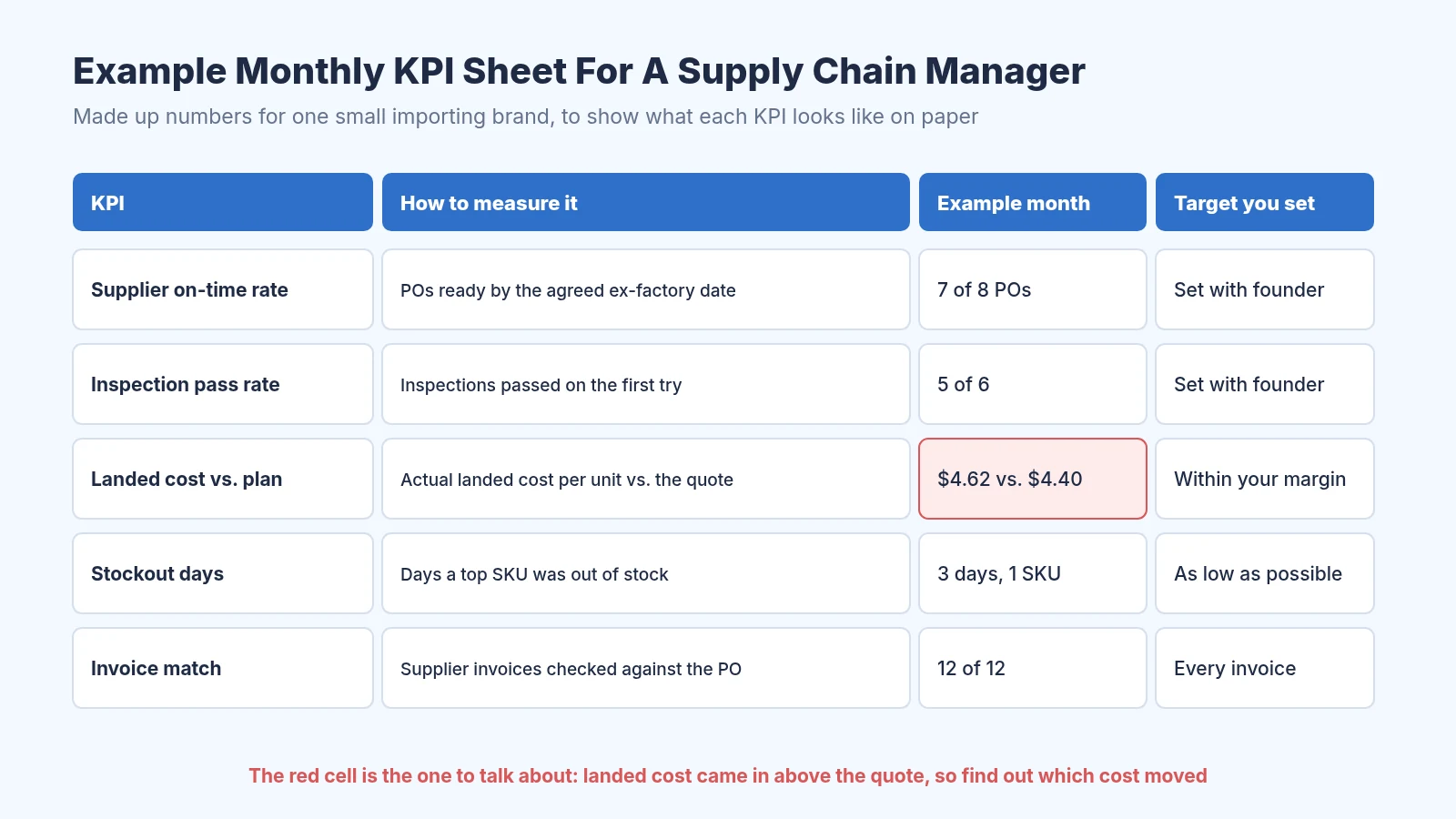
An example KPI sheet with made up numbers
- Supplier on-time rate. The share of POs ready by the ex-factory date the supplier agreed to.
- Inspection pass rate. The share of inspections that passed on the first try.
- Landed cost against plan. Actual landed cost per unit compared with the quote you priced the product on.
- Stockout days. How many days your best sellers were out of stock, and why.
- Invoices matched to POs. Every supplier invoice checked against its purchase order before payment.
If you already score suppliers, the free supplier evaluation matrix template gives your manager a ready format for the supplier side of these numbers. The lead time tracker template helps with on-time rate and reorder timing.
Supply Chain Manager Job Description Template
Copy this template, change the parts in brackets, and cut any duty that doesn't apply to your business. I've written it for a small brand that buys from overseas factories and sells on Amazon, Shopify, or both. Keep it short enough that a good candidate reads to the end.
Job Title
Supply Chain Manager, E-Commerce (Remote or [City]). If you want part-time or contract help first, use Supply Chain Coordinator and keep only the follow up, document, and receiving duties.
About The Role
[Brand name] sells [product category] on [Amazon, Shopify, or both] and makes everything with factories in [country]. We're looking for one person to own our supply chain from supplier quote to sellable stock. You'll report to [founder name] and work with our suppliers, freight forwarder, customs broker, and [3PL or Amazon FBA].
What You'll Own
- Find, sample, and onboard new suppliers, and keep a supplier file for every product.
- Issue purchase orders and arrange deposit and balance payments by bank transfer after verifying supplier bank details.
- Follow production with each factory and flag delays as soon as you see them.
- Book pre-shipment inspections and decide next steps when units fail.
- Get freight quotes, book shipments, and work with our forwarder and customs broker.
- Send inbound notices to our 3PL or create FBA shipments, and check received counts against packing lists.
- Match supplier invoices to POs and keep landed cost per unit up to date.
- Plan reorders using lead times and sales so our best sellers stay in stock.
What You'll Bring
- [3 or more] years managing overseas suppliers for physical products.
- Strong Google Sheets or Excel skills, including a PO tracker and landed cost sheet.
- Clear, short written English for email and chat with suppliers.
- Working knowledge of FOB, EXW, and DDP, HS codes, and customs clearance.
- Experience with [Amazon FBA inbound shipments or a 3PL], or the ability to learn it quickly.
How We'll Measure Success
- Supplier on-time rate and inspection pass rate.
- Landed cost per unit compared with plan.
- Stockout days on our top products.
- Every supplier invoice matched to its purchase order before payment.
Pay, Location, And Reporting
Pay is [salary range] plus [benefits]. This role is [remote, hybrid, or onsite in City] and reports to [founder name]. To apply, send a short note about one supplier problem you solved and how you solved it.
Several US states, including Colorado, California, New York, and Washington, require a pay range in job postings, so check your state's rules before you post. If you're not sure what range to use, the section below and our salary guide can help.
What To Leave Out Of The Job Description
Most free templates come from large companies, so they're full of items that scare off good small-brand candidates or attract the wrong ones. I'd cut anything about running a warehouse team, choosing loading equipment, or managing a truck fleet if your 3PL or Amazon does that work. The BLS notes that some of these managers need a driver's license or CDL, but that only matters if your manager will actually drive or run transportation.
I'd also drop long lists of enterprise software. O*NET's software list for this job includes tools like SAP, Oracle, and Microsoft Dynamics, and asking for them makes sense only if you run one. A small brand is better served by asking for strong spreadsheet skills and willingness to learn whatever you use.
Finally, leave out vague lines like "drive end-to-end excellence" or "own the supply chain vision." They don't tell a candidate what Tuesday looks like. A specific duty, like matching every supplier invoice to its PO, tells them far more.
What Public Pay Data Says
The closest federal pay data for this role is the BLS group for transportation, storage, and distribution managers, which includes supply chain and logistics managers. The median annual wage was $107,230 in May 2025, with the lowest 10 percent earning less than $65,120 and the highest 10 percent earning more than $194,900. Pay varies by industry, location, and how much of the job the person really owns.
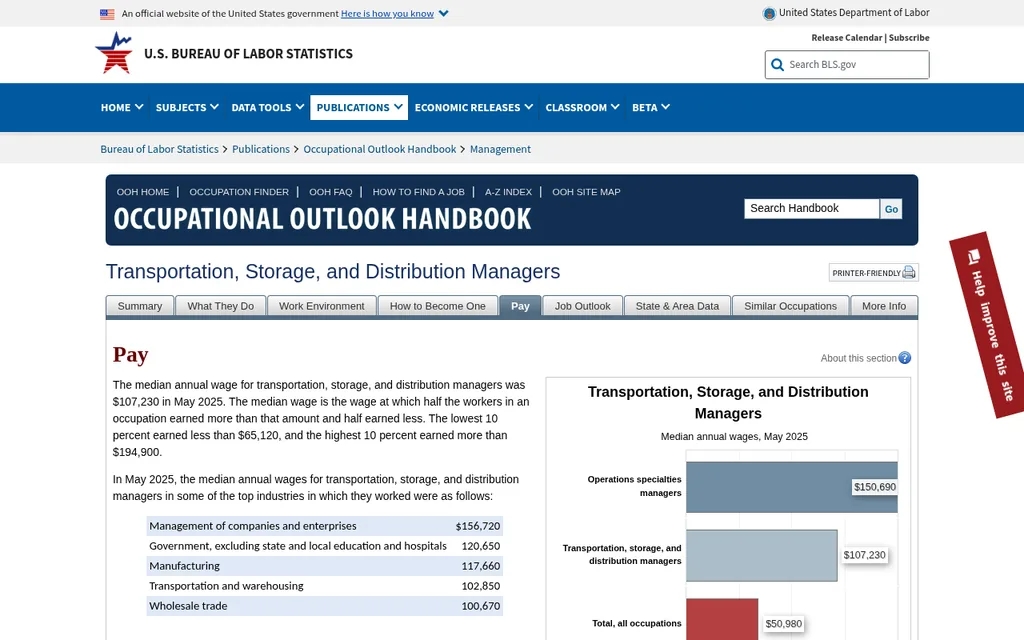
BLS pay data for transportation, storage, and distribution managers
Salary is only part of what a hire costs, because payroll taxes, benefits, and recruiting add more on top. Our supply chain manager salary guide works through the full year one cost with sourced numbers. If the total feels too high for where you are, compare it with software and outsourcing in our hire or use software guide.
Tools The Supply Chain Manager Will Use
Your new hire will spend most of the day in email, chat, and spreadsheets. A shared spreadsheet in Google Sheets or Excel with a PO tracker and a landed cost tab is a fine starting point, and many small brands run this way for a long time. The free purchase order template, RFQ template, and packing list template give them a consistent format from day one.
Google Sheets product page
Microsoft Excel product page
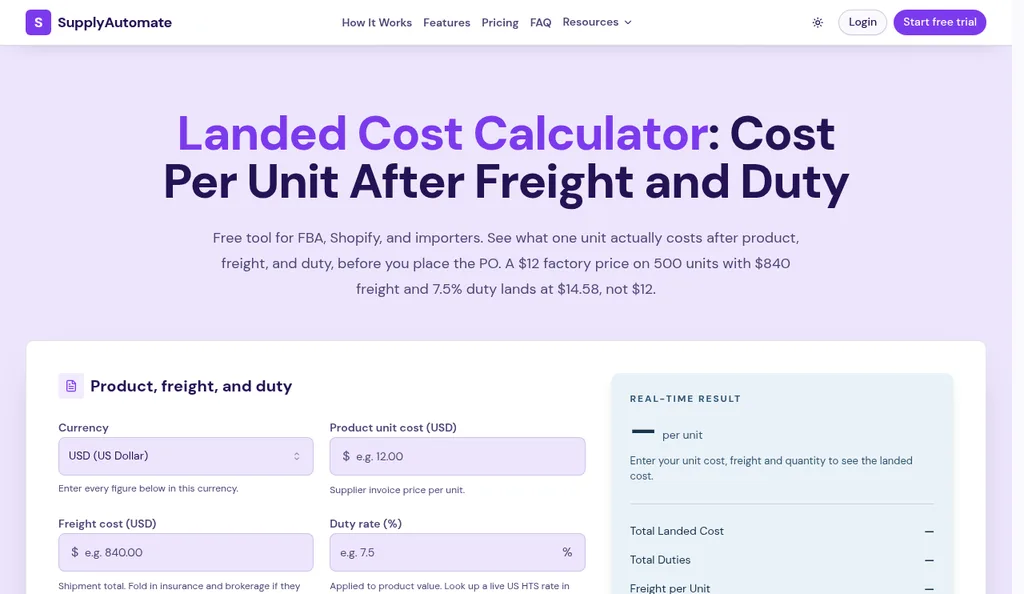
Free calculators help with the math. The landed cost calculator works out per unit cost, the import duty calculator estimates duty, the freight cost estimator helps compare shipping options, and the lead time calculator shows when the next PO should go out. The MOQ calculator helps when a supplier's minimum order feels too big.
SupplyAutomate's free landed cost calculator
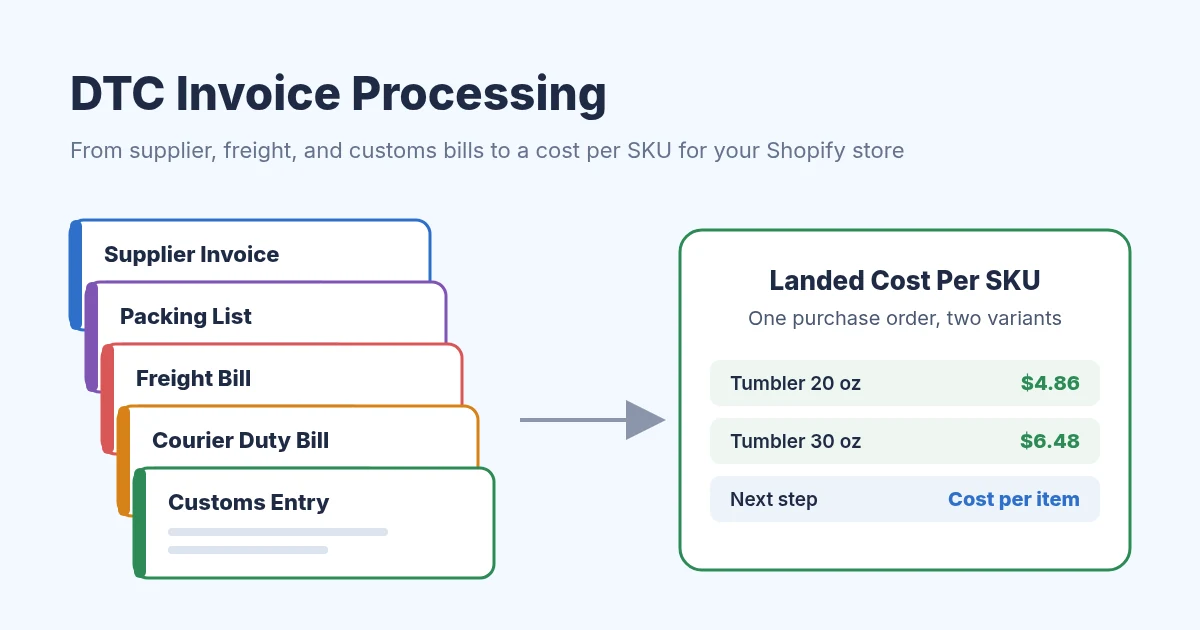
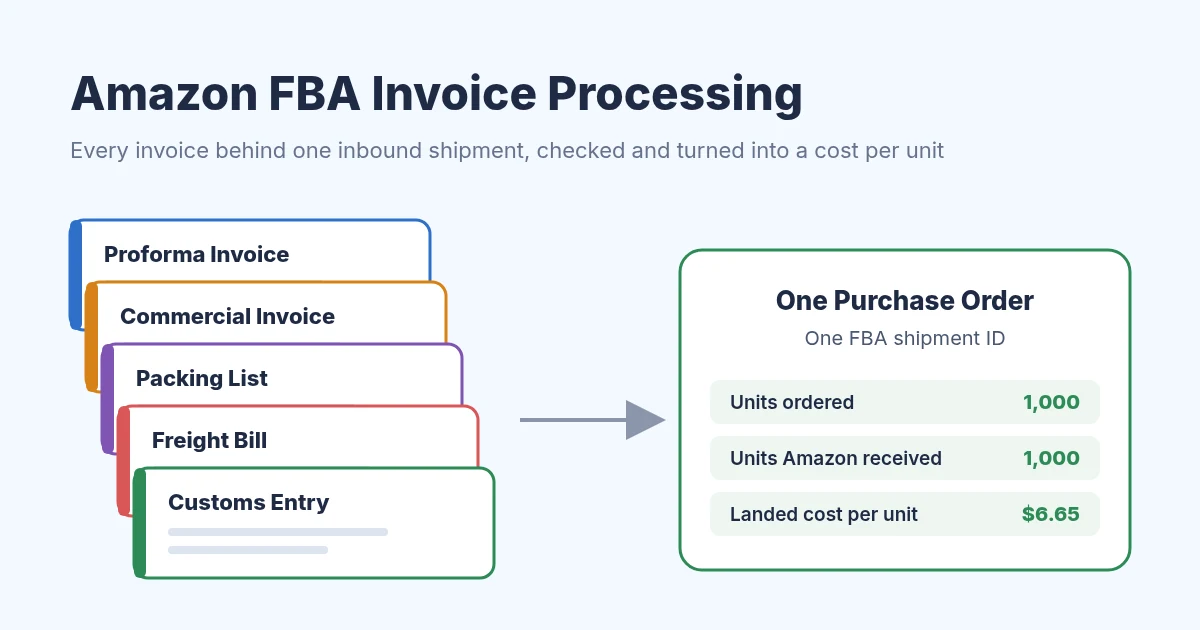
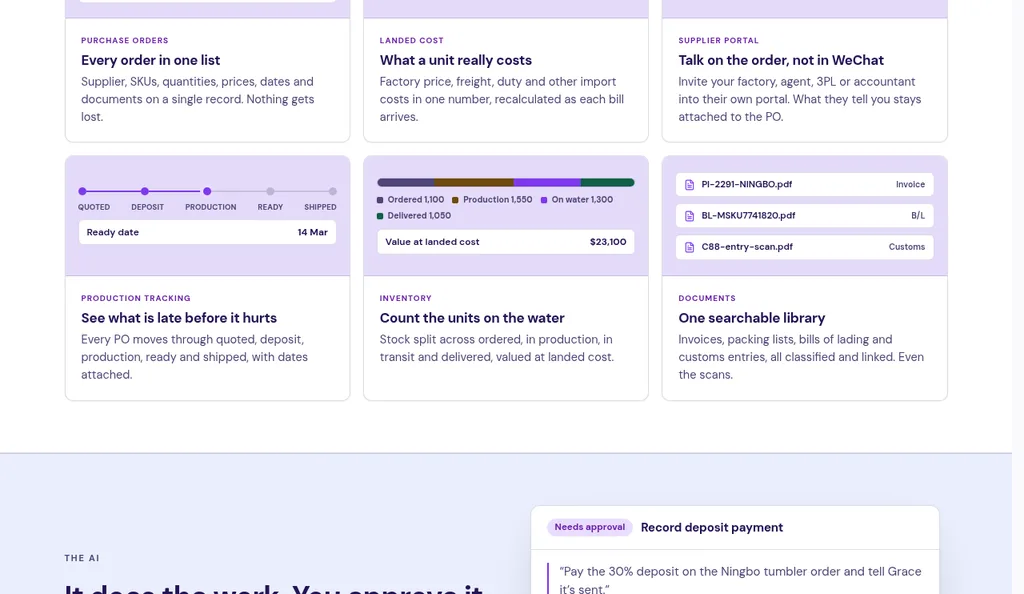
SupplyAutomate is the tool I built for the record keeping side of this job. Each purchase order keeps its supplier, production status, and documents together, and your manager uploads supplier invoices, packing lists, freight bills, and customs entries to it. It tracks parcels and ocean containers and works out landed cost per unit from factory price, freight, duty, and samples.
SupplyAutomate keeps each purchase order and its documents together
It doesn't connect to Shopify, Amazon, WooCommerce, or your accounting software, and it doesn't sync sales or orders. You export to CSV or Excel when you need the numbers elsewhere. You can see how it works for Shopify brands and Amazon FBA sellers, and pricing is a 14-day trial, then $199 a month or $1,999 a year.
Frequently Asked Questions
What Does A Supply Chain Manager Do At An E-Commerce Brand?
They manage the path from supplier to sellable stock. That includes sourcing suppliers, placing purchase orders, following production, booking inspections, arranging freight and customs, and receiving at a 3PL or Amazon. At an importing brand they also keep landed cost per unit up to date.
What Should A Supply Chain Manager Job Description Include?
It should include a short summary of your business, a list of duties based on one import order, the skills you'll test for, and the KPIs you'll review. Add the pay range, location, and who the role reports to. Many US states require the pay range by law, so check yours.
What Skills Does An E-Commerce Supply Chain Manager Need?
The most useful skills are spreadsheet fluency, clear written English, supplier negotiation, landed cost math, and basic Incoterms and customs knowledge. FBA sellers should also look for experience with Amazon inbound shipments. Experience managing overseas factories for physical products matters more than any single software tool.
Is A Supply Chain Manager The Same As A Logistics Manager?
They overlap, and small brands often use the titles interchangeably. A logistics manager usually focuses on moving and storing goods, while a supply chain manager also owns suppliers, purchase orders, and cost. At an importing brand, the supply chain title usually fits better because supplier work is a big part of the job.
Do I Need A Full-Time Supply Chain Manager?
Not always. Many small brands start with the founder doing the work, then add a part-time coordinator or an outsourced service before hiring full time. Our hire or use software guide compares those options with real costs.
How I'd Write This Job Post Today
If I were hiring my first supply chain manager today, I'd start by writing down how I place and follow one order, step by step. Then I'd turn those steps into the duties list, add the five KPIs, and post a real pay range. I'd ask every applicant to describe one supplier problem they solved, because that answer tells you more than a resume.
Keep the posting specific to your business and short enough to read in a few minutes. The right candidate will recognize their own experience in it, and the wrong ones will skip it. If you're still weighing a hire against software or outsourcing, the guides below cover the next decisions.
Related Guides

Hire A Supply Chain Manager Or Use Software? A 2026 Guide
Should you hire a supply chain manager, use software, or outsource? Compare BLS salary data, real year one costs, and what each option covers for brands.

Supply Chain Manager Salary In 2026: Real Cost To Hire
Supply chain manager salary in 2026 from BLS data, plus payroll taxes, benefits, and recruiting, so you can see what it really costs to hire one this year.

Outsourced Supply Chain Management For Ecommerce
What outsourced supply chain management covers for ecommerce importers, when to use software or an Outsourced Supply Chain Manager, and 2026 pricing.

Supplier Onboarding Process: 5 Steps for E-Commerce
Build a supplier onboarding process for Amazon FBA, Shopify, and WooCommerce with five steps for risk checks, documents, systems, training, and reviews.

Supplier Evaluation Matrix For Importers
A weighted factory scorecard: total cost, on-time, quality, docs. Worked table: 8.15 vs 7.00 vs 7.90, so you stop picking on memory.
DTC Supplier Management: Factories, Packaging, And Launches
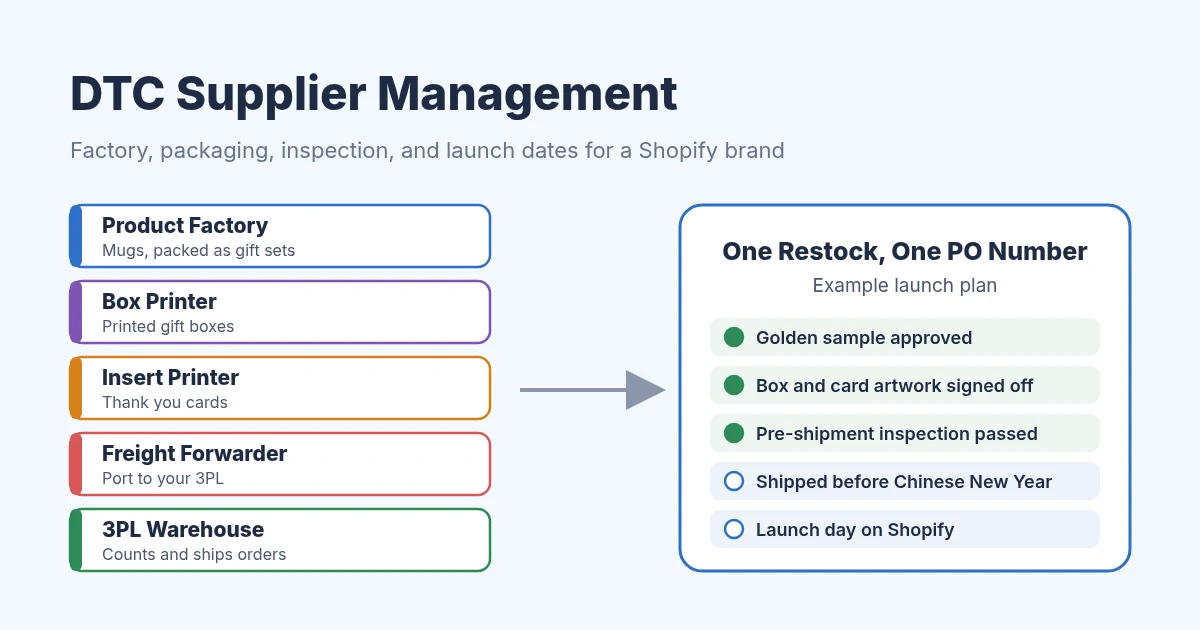
DTC supplier management for Shopify brands: run your factory, box printer, forwarder, and 3PL on one PO, approve samples, inspect, and time your launches.
How To Reconcile A Supplier Invoice To A Purchase Order
A five-step routine for importers to match a supplier invoice against the purchase order and receiving record, sort out variances, and keep landed cost accurate.
The Procure To Pay Process For Ecommerce Importers
How the procure to pay process works for ecommerce importers: each stage from PO to supplier payment, the documents, who does what, and the checks to run.

How To Manage Supplier Orders Over WeChat
WeChat is the channel, not the PO. How FBA and Shopify importers version orders, treat screenshots as evidence, and check landed cost before the next reorder.
Supply Chain Visibility Software For FBA And Shopify Sellers
Supply chain visibility software for FBA and Shopify sellers: what to track from factory to shelf, free and paid tools, and how to set up your next order.

Ecommerce ERP: What It Is And Who Needs One
Ecommerce ERP explained: what it does, who needs one, and how it ties your Shopify and WooCommerce orders to inventory, purchase orders, and landed cost.

Best Supply Chain Control Tower Software for E-Commerce
Compare supply chain control tower software for e-commerce sellers, including visibility strengths and fit for Amazon FBA, Shopify, and WooCommerce.
SupplyAutomate Pages And Free Tools
SupplyAutomate For Shopify Brands
SupplyAutomate For Amazon FBA Sellers
SupplyAutomate Pricing
Outsourced Supply Chain Manager
Free Landed Cost Calculator
Cost per unit after product, freight, and duty
Free Lead Time Calculator
Lead time, reorder point, and the latest date the next PO can go out
Free MOQ Calculator
EOQ vs factory MOQ, and the annual premium of the minimum
Free Import Duty Calculator
Live HTS rate plus CBP fees, before you place the PO
Free Freight Cost Estimator
Compare sea and air freight cost, chargeable weight, and transit time
Free Purchase Order Creator
Build a purchase order online and download it as a PDF
Free Supplier Evaluation Matrix Template
Free Lead Time Tracker Template