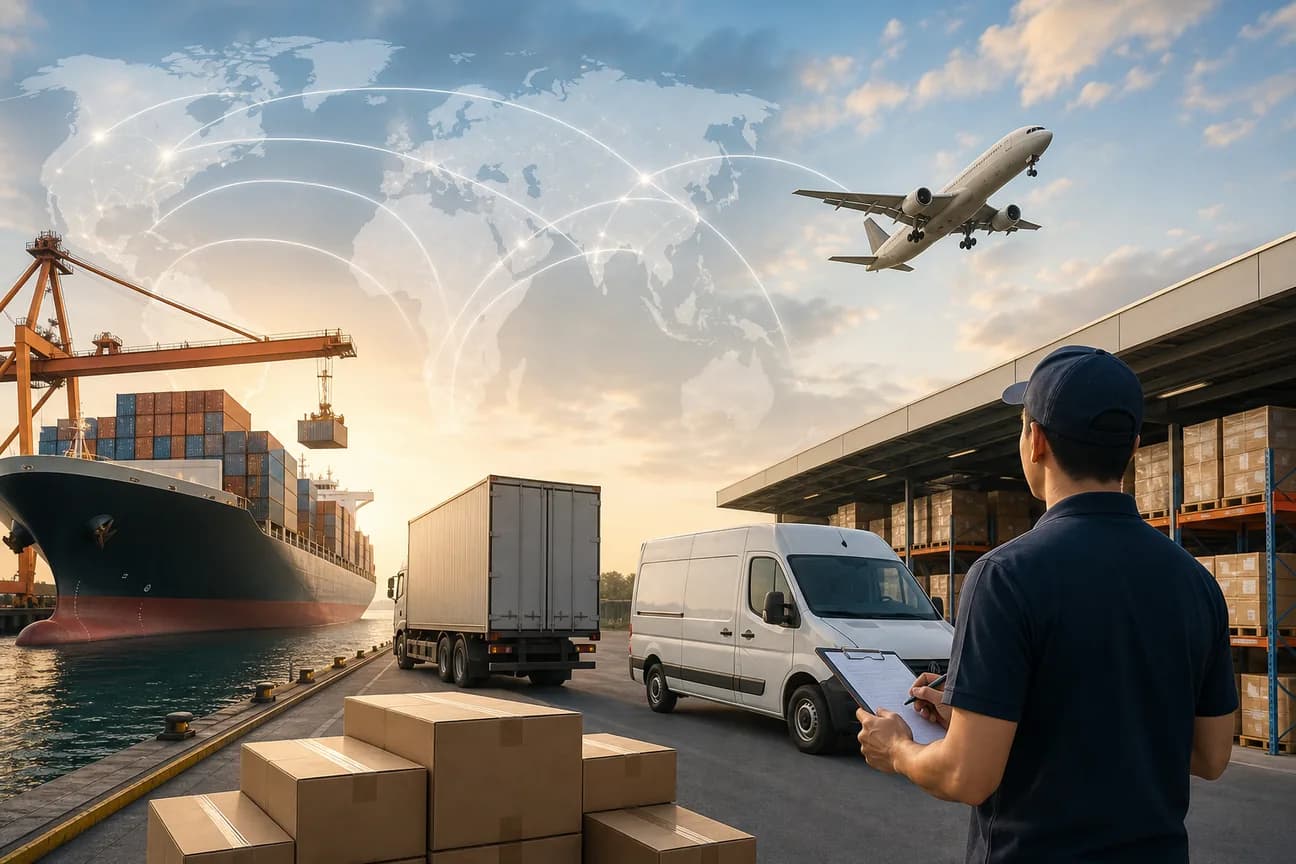
Your supplier quotes three factory prices on the same PO: one labeled FOB Shanghai, one EXW Shenzhen, and one DDP to an Amazon FBA warehouse. The DDP number looks highest. The EXW number looks cheapest. None of them is the full story until you add the freight bill, the customs entry, and whatever samples you paid for along the way.
I ran into that stack of quotes every time we booked another China container for our FBA and Shopify brand. The Incoterm on the commercial invoice decides who books the carrier, who clears export, who pays duty, and when the cargo becomes your problem if something goes wrong. This guide walks through FOB, EXW, and DDP the way an FBA importer actually uses them, then shows how to compare quotes with a real landed cost instead of a factory line alone. The official rulebook lives with the International Chamber of Commerce Incoterms 2020 pages. What follows is the practical read for sellers moving finished goods into Amazon or a WooCommerce warehouse.
One product note up front: SupplyAutomate does not pull freight quotes, sync marketplace orders, or rank Incoterms for you. It helps when you upload the supplier invoice, packing list, freight bill, and customs entry so you can compute factory price plus freight plus duty plus samples and export a clean CSV. Use that math to make FOB, EXW, and DDP quotes comparable.
TL;DR
- Incoterms set who pays freight and duty, who handles export and import clearance, and where risk transfers on the route into FBA.
- FOB is common for ocean containers when you want your own forwarder after the origin port. EXW puts almost everything on you from the factory door. DDP puts almost everything on the seller through delivery and duty.
- Compare quotes on total landed cost per unit. Add freight, duty, and samples the same way for every option so the factory line is just the starting point.
- SupplyAutomate organizes the shipment documents and calculates that landed cost from what you upload. It does not connect to Amazon, Shopify, or WooCommerce, and it does not auto-pull carrier quotes.
What Incoterms Decide On An FBA Shipment
An Incoterm is a three-letter code on the sales contract and commercial invoice. It describes how cost, paperwork, and risk are split between you and the supplier, and it sits alongside your shipping method and customs forms. For an FBA inbound, the term answers four questions you will feel in cash and in risk:
- Who books and pays main carriage (ocean, air, or truck)?
- Who handles export clearance in the origin country?
- Who pays import duty and taxes into the destination country?
- At which point does loss or damage become the buyer's problem?
Amazon's FBA inbound rules still apply after the goods clear. Prep, labeling, appointment windows, and warehouse routing are separate from the Incoterm. The term only allocates the international handoff. When duty is part of your unit cost, use how to calculate import duty from China alongside the freight quote so the comparison stays honest.
FOB (Free On Board)
FOB means the seller delivers the goods on board the vessel nominated by the buyer at the named port of shipment. In day-to-day China-to-US FBA work, the supplier usually gets the cargo to the origin port, completes export formalities, and loads onto the vessel. You (or your forwarder) book the ocean leg, arrange US customs, pay duty, and move the container or cartons onward to the Amazon fulfillment center.
Risk typically transfers once the goods are on board at the named port. That is why FOB quotes look mid-range: the factory price embeds inland origin costs and export handling, but ocean freight and US duty sit on your side of the ledger. FOB is a maritime term in the ICC rules. If your replenishment is air freight, ask for FCA or another air-friendly term instead of forcing FOB language onto an airport handoff.
FOB fits importers who already have a freight forwarder and a customs broker, want carrier choice after the port, and are willing to own duty and the last mile into FBA. It is a poor fit when you have no broker and no one watching the arrival notice.
EXW (Ex Works)
EXW means the seller makes the goods available at their premises (or another named place). You arrange pickup, export clearance, main carriage, import clearance, duty, and delivery. The factory price is usually the lowest line item of the three, because the supplier is only selling goods at the door and leaves the logistics to you.
The catch shows up in origin country paperwork. Under a strict EXW reading, export declarations are the buyer's job. Many China factories still help in practice, but you should not assume that help is included. If your forwarder cannot handle origin export, EXW can stall the load before anything floats.
EXW fits experienced importers with a forwarder who can collect at the factory and clear export. It is a rough first choice for a new seller who only has a factory WeChat thread and no logistics partner.
DDP (Delivered Duty Paid)
DDP means the seller delivers the goods cleared for import to the named place of destination, and the seller pays duty and taxes. For FBA sellers, that named place is often a prep center or, when the seller can meet Amazon's inbound requirements, a path that ends near an Amazon FC. You pay one commercial total that is supposed to include freight and duty.
DDP can simplify cash flow because you are not juggling a freight invoice and a separate duty payment on the same shipment. It can also hide margin. Sellers sometimes pad duty estimates or leave terminal and prep fees fuzzy. Ask for a line-item breakdown before you compare DDP to an FOB or EXW stack you built yourself.
DDP also depends on the seller (or their agent) being able to act as importer of record in your market. If they cannot, the quote may quietly become something else at the border. Read the named place carefully. "DDP Los Angeles" ends at a city, while "DDP Amazon ONT8 with labeling complete" covers delivery into a specific fulfillment center with prep done, so the two quotes price very different amounts of work.
Side By Side Comparison
| Aspect | FOB | EXW | DDP |
|---|---|---|---|
| Factory price usually includes | Goods to named port, export handling | Goods at factory door | Goods plus freight and duty to named place |
| Who books main carriage | Buyer or buyer's forwarder | Buyer or buyer's forwarder | Seller |
| Who pays import duty | Buyer | Buyer | Seller |
| Typical risk transfer | On board at origin port | At seller's premises | On delivery at named destination |
| Best fit for FBA | Importers with a forwarder and broker | Importers who can collect and clear export | Sellers who want one invoice and trust the DDP partner |
| Watch-outs | Own the ocean and US clearance | Origin export paperwork | Hidden fees, IOR capability, named place clarity |
Use the table as a checklist when three quotes land in the same email thread. Then rebuild each option as a landed cost so the comparison uses the same cost buckets.
How To Pick For Your Next Container
Start from your real constraints: who you already have on freight and customs, and how much of the handoff you can manage yourself. If you already work with a forwarder and a US customs broker, FOB (ocean) or a clear FCA quote (air) usually gives you the most control over routing and transit time. Build the full cost with how to calculate Amazon FBA landed cost before you accept the "cheap" EXW line.
If you are still learning origin export and you do not have pickup arranged, skip EXW until your forwarder confirms they can collect and clear. Paying a slightly higher FOB or DDP quote is often cheaper than a delayed sail because paperwork stalled at the factory gate.
If you want one invoice and your supplier (or their forwarder) can truly deliver duty paid to the place you named, DDP can be the cleanest operations path. Verify the named place, ask for duty and freight as separate lines inside the quote, and confirm who is importer of record. Then compare that total to an FOB build you trust.
When the work of chasing carriers and documents is the bottleneck, an Outsourced Supply Chain Manager can own the quote comparison and the document stack while you stay on product and ads.
How Landed Cost Changes With Each Term
Landed cost for an importer here means factory price plus freight plus duty plus samples, allocated to units. It does not include Amazon FBA fulfillment fees, storage, ads, or returns. Those belong in a separate margin model. For the importer definition, see landed cost for Amazon FBA and landed cost vs COGS.
On an EXW quote, almost every logistics line sits outside the factory invoice. Your landed cost spreadsheet has to pull in export handling, main carriage, destination charges, duty, and samples from other PDFs.
On an FOB quote, some origin costs are already inside the commercial invoice. You still add ocean (or onward) freight, destination charges, duty, and samples. Do not double-count inland China trucking that the supplier already baked into FOB.
On a DDP quote, freight and duty may already sit inside the seller's total. Your job is to confirm those lines are real, then still add any samples, prep, or domestic legs that were excluded. If the DDP total is a black box, you cannot tell whether you are paying for duty twice in spirit or missing a terminal fee that will appear later.
When freight must be split across SKUs on a mixed container, use the same allocation method for every Incoterm option so the per-unit comparison stays fair. A walkthrough lives in ecommerce landed cost calculator. For category tooling after the shipment math is done, the Amazon FBA ERP page maps what belongs in purchasing and documents versus marketplace ops.
Where SupplyAutomate Fits
SupplyAutomate is built for the document side of this decision. You upload supplier invoices, packing lists, freight bills, and customs entries, track parcels and ocean containers, and calculate landed cost from factory price, freight, duty, and samples. Then you export CSV or Excel for your own books or sheets.
That is the honest scope. SupplyAutomate does not connect to Shopify, Amazon SP-API, WooCommerce, QuickBooks, or Xero. It does not sync sales or orders. It does not pull live freight quotes or exchange-rate models into an Incoterm ranking tool. If two suppliers send FOB and DDP on the same SKU, you still collect both quotes yourself. The product helps you file the PDFs against the shipment and see whether the totals make sense on a per-unit basis before you reorder.
If that document-plus-landed-cost workflow is what you need, check pricing. If you want a person running the Incoterm comparison and the inbound chase, use the Outsourced Supply Chain Manager option.
FAQ: FOB Vs EXW Vs DDP For FBA Sellers
What Does FOB Mean For An Amazon FBA Shipment?
FOB (Free On Board) usually means the supplier gets the goods on the vessel at the named origin port. You book the ocean move, clear US customs, pay duty, and arrange the path into FBA. Confirm the named port on the invoice so inland China costs are not ambiguous.
Is EXW Always Cheaper Than FOB?
The EXW factory line is often lower because logistics are excluded. Once you add pickup, export clearance, freight, and duty, EXW can cost more than a solid FOB quote, especially if origin export is slow or expensive. Compare the full landed cost per unit before you decide.
Can I Use FOB For Air Freight Into FBA?
FOB is written for sea carriage in the ICC rules. For air, ask for FCA (or another term your forwarder prefers) so export handling and the handoff match how air cargo actually moves.
Is DDP Safe For New FBA Sellers?
DDP can be simpler when the seller can deliver duty paid to a clear named place and you trust their duty math. How safe it is depends on the partner behind the quote. You still need visibility into fees, importer-of-record capability, and whether Amazon prep is included. A vague DDP total is hard to audit later.
How Do I Compare Three Quotes Fairly?
Rebuild each option with the same buckets: factory goods, freight, duty, samples, and any prep that belongs in unit cost. Put every supporting PDF next to the PO. Tools and posts under how to calculate landed cost walk through the arithmetic without inventing fees.
Does SupplyAutomate Choose The Best Incoterm For Me?
No. It does not rank FOB, EXW, or DDP, and it does not pull carrier quotes. It helps you organize shipment documents and calculate landed cost from those documents so your own comparison is based on complete costs.
Related Guides
- How To Calculate Import Duty From China
- How To Calculate Amazon FBA Landed Cost
- Landed Cost For Amazon FBA
- How To Calculate Landed Cost
- Ecommerce Landed Cost Calculator
- Landed Cost Vs COGS
- Supplier Management Software
- Is Shopify Cost Tracking Enough For Landed Cost?
- How To Get Supplier Invoices Into QuickBooks Online